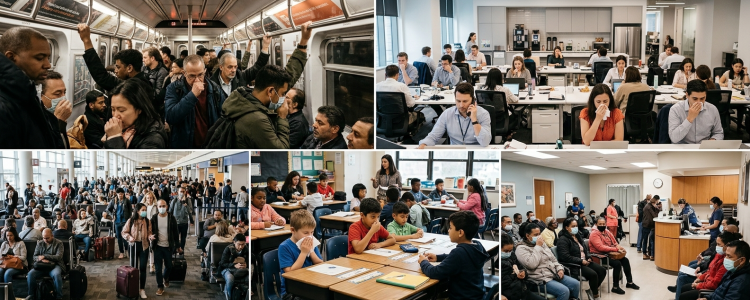
Respiratory illnesses — from mild colds and flu to serious conditions like pneumonia and asthma — affect millions of people worldwide every year. While these illnesses can strike anywhere, certain environments and locations dramatically increase your risk of exposure. Understanding where respiratory illnesses thrive can help you take precautions and protect your health. Here is a ranked look at the five most significant hot spots for respiratory illness transmission and development.
1 Hospitals and Healthcare Facilities
Topping our list, hospitals and other healthcare settings rank as the most dangerous hot spots for respiratory illness transmission. This may seem counterintuitive — after all, these are places designed for healing — but the concentration of sick patients, coupled with high foot traffic, creates a perfect storm for the spread of airborne pathogens.
Why Healthcare Settings Are So Risky
Patients in hospitals often have weakened immune systems, making them far more susceptible to infections. When respiratory viruses like influenza, RSV (Respiratory Syncytial Virus), the consequences can be severe. Healthcare-associated respiratory infections (also called nosocomial infections) account for a significant percentage of all hospital-acquired conditions globally.
Ventilation systems in older hospital buildings can sometimes recirculate contaminated air, and the sheer number of people moving in and out of wards each day makes containment extremely challenging. Even healthcare workers, despite wearing protective equipment, are at elevated risk of both contracting and transmitting respiratory illnesses.
What the Data Says
According to the World Health Organization (WHO), healthcare-associated infections affect hundreds of millions of patients annually. In the United States alone, the Centers for Disease Control and Prevention (CDC) estimates that healthcare-acquired infections contribute to tens of thousands of deaths each year, with pneumonia and lower respiratory tract infections among the most deadly.
Protective Tip: If you are visiting someone in a hospital, always wear a mask, wash your hands frequently, and avoid visiting if you are feeling unwell. Ask staff about their infection control protocols.
2 Schools and Childcare Centers
Coming in at a strong second place, schools and childcare centers are extraordinarily efficient incubators for respiratory illness. Children are in close physical contact for hours each day, share common surfaces, and have not yet built up full immunity to many circulating pathogens. This makes educational settings a prime breeding ground for respiratory infections.
Children as Vectors of Disease
Young children, particularly those under the age of five, shed viral particles for longer periods than adults and are less likely to practice consistent hand hygiene or cover coughs and sneezes properly. Viruses like rhinovirus (the common cold), influenza, RSV, and adenovirus spread rapidly through classrooms, especially during cooler months when windows are closed and indoor airflow is limited.
The impact doesn't stop at the schoolhouse door. Children routinely bring these pathogens home, infecting parents, grandparents, and siblings. This ripple effect is why respiratory illness rates in the general community tend to spike shortly after the start of each school year.
Common Illnesses Found in Schools
- Influenza (Flu)
- RSV (Respiratory Syncytial Virus)
- Common Cold (Rhinovirus)
- Strep throat (which can cause respiratory complications)
- Whooping Cough (Pertussis)
Protective Tip: Ensure children are up to date on vaccinations, teach proper handwashing technique, and encourage schools to regularly disinfect high-touch surfaces and improve classroom ventilation.
3 Public Transportation Hubs
Airports, train stations, subway systems, and bus terminals earn the third spot on our list. These crowded, often poorly ventilated spaces bring together thousands of people from diverse geographic locations, creating an ideal environment for respiratory pathogens to find new hosts and spread across vast distances.
The Airport Effect
Airports deserve special attention within this category. Air travel has long been associated with the global spread of respiratory illnesses. The recycled air in aircraft cabins, combined with the low humidity that dries out nasal passages (reducing their ability to filter pathogens), makes flying a particularly high-risk activity during outbreak seasons.
Inside terminal buildings, people wait in long queues, sit in crowded waiting areas, and handle shared surfaces such as security bins, door handles, and escalator rails. This combination of close proximity and surface contamination is a textbook recipe for respiratory transmission.
Subway Systems and Buses
Urban transit systems present similar challenges. Subway cars and buses during rush hour often far exceed comfortable passenger density. Poor ventilation in underground systems means that viral particles can linger in the air for extended periods. Studies have linked high use of public transit during flu season with elevated rates of respiratory illness in dense urban populations.
Protective Tip: Wear a mask during peak travel times or when ill. Use hand sanitizer after touching shared surfaces. Consider traveling during off-peak hours when possible to reduce crowding exposure.
4 Long-Term Care and Nursing Facilities
Long-term care facilities, including nursing homes and assisted living communities, rank fourth on our list — and the stakes here are exceptionally high. The residents of these facilities are predominantly elderly individuals who often have multiple underlying health conditions, making them uniquely vulnerable to severe respiratory illness.
Why Elderly Residents Face Greater Risk
As we age, the immune system undergoes a process called immunosenescence — a gradual decline in immune function that makes it harder to fight off infections. Elderly individuals also frequently have chronic conditions such as COPD (Chronic Obstructive Pulmonary Disease), heart disease, or diabetes, all of which can worsen outcomes from respiratory infections like influenza or pneumonia.
Respiratory illnesses that would cause only mild symptoms in a healthy adult can rapidly escalate to life-threatening pneumonia in a frail elderly person.
Structural Challenges in These Facilities
Shared dining rooms, communal activities, and shared bathroom facilities all contribute to rapid transmission within these environments. Staff members who work across multiple care homes, or who come to work while symptomatic, have historically played a role in introducing pathogens into these vulnerable communities.
Protective Tip: Families should ask care facilities about their infection prevention protocols, vaccination policies for both residents and staff, and ventilation standards. Advocate for regular respiratory illness screening programs.
5 Heavily Polluted Urban and Industrial Areas
Rounding out our top five, heavily polluted urban centers and industrial regions represent a unique and chronically underappreciated hot spot for respiratory illness. Unlike the other entries on this list, the danger here isn't primarily about infectious disease transmission — it's about the long-term degradation of lung health that makes people far more susceptible to respiratory infections and chronic conditions.
Air Pollution and Lung Damage
Fine particulate matter (PM2.5), ground-level ozone, nitrogen dioxide, and sulfur dioxide are among the most damaging airborne pollutants. When inhaled regularly, these particles penetrate deep into the lungs, causing inflammation, scarring, and a reduction in lung capacity. The WHO has classified outdoor air pollution as a leading environmental cause of death and disease worldwide.
People who live or work in heavily polluted areas — near highways, factories, coal plants, or in cities with high vehicle emissions — have a significantly higher risk of developing asthma, chronic bronchitis, COPD, and lung cancer. They are also more likely to suffer severe complications when they contract infectious respiratory illnesses like influenza.
Global Pollution Hot Spots
Some of the world's most polluted cities include Delhi, India; Lahore, Pakistan; Dhaka, Bangladesh; and several cities in China and parts of sub-Saharan Africa. However, even in developed nations, inner-city neighborhoods near industrial zones frequently show elevated rates of asthma and respiratory disease, often disproportionately affecting lower-income communities.
- Delhi, India — frequently records PM2.5 levels many times above WHO safe limits
- Lahore, Pakistan — consistently ranks among the world's most polluted cities
- Beijing, China — has made improvements but still faces significant smog events
- Industrial corridors in Eastern Europe — elevated rates of chronic lung disease
- Urban inner cities in the U.S. near highways — higher childhood asthma rates
Protective Tip: Monitor daily air quality index (AQI) readings in your area. On high pollution days, limit outdoor activity, keep windows closed, and use air purifiers with HEPA filters indoors. Wearing an N95 mask outdoors can provide meaningful protection on extremely polluted days.
Key Takeaways: Reducing Your Risk Everywhere
No matter where you live or work, there are universal steps you can take to reduce your risk of respiratory illness in any high-risk environment.
Vaccination Is Your First Line of Defense
Staying current with recommended vaccines — including the annual flu shot, pneumococcal vaccines, and RSV vaccines for those who qualify — significantly reduces your risk of serious illness. Vaccines don't just protect you; they reduce the overall amount of virus circulating in communities.
Indoor Air Quality Matters More Than You Think
Whether at home, in an office, or in a public building, good ventilation dramatically reduces the concentration of airborne pathogens. Open windows when weather permits, use air filtration systems, and advocate for buildings to meet modern ventilation standards.
Basic Hygiene Remains Powerfully Effective
Regular handwashing with soap and water for at least 20 seconds, avoiding touching your face in public spaces, and covering coughs and sneezes with a tissue or elbow remain among the most effective and underrated tools for respiratory illness prevention. These simple habits can reduce transmission dramatically across all five of the hot spots identified in this article.
Disclaimer: This article is intended for general informational purposes only and does not constitute medical advice. Always consult a qualified healthcare professional for guidance on preventing and treating respiratory illness. Data referenced reflects publicly available information from the WHO, CDC, and peer-reviewed public health sources.
Health Disclaimer: All content and media on Zubican.com are produced for general informational purposes only. This content is not meant to be an alternative to professional advice from a doctor or other healthcare provider and shouldn’t be relied on as personal health advice. Results of any treatment or advice used from Zubican.com's content may have varying results.
It is strongly recommended to always seek the guidance of a doctor or other healthcare provider with questions regarding any health or a medical issue. Advice and treatment plans should never be disregard from a medical professional, or delay seeking it because of the content on Zubican.com.
If a medical emergency, call a doctor, travel to the closest hospital emergency department, or dial 9-1-1 immediately. Choosing to rely on any content provided by Zubican.com, is solely done at your own risk.